Silas Harley stopped for a moment he would barely remember. Then he heard it — a thin, fragile cry that didn’t expect an answer. He followed the sound into a muddy ditch and found a newborn girl, wrapped in a filthy towel, skin blue from the cold, barely breathing.
Rage flared, but instinct took over. He pulled her close, wrapped her in his vest, and pressed warmth into her tiny body. “It’s okay,” he whispered, breath shaking in the cold air, “you’re safe now.”
Her cry softened until it was more whimper than wail. Her fingers curled against his chest like she was trying to grab onto life itself. Silas held her as if letting go would mean the world ended.
Mud soaked through his jeans and the ditch water bit at his knees. Cars rushed by on the road above, their drivers blind to the miracle happening ten feet below the asphalt.
The world kept moving while he knelt there, refusing to move at all.
He balanced his phone between his shoulder and ear, heart racing as he spoke to the dispatcher.
Words tumbled out of him—ditch, baby, cold, blue, hurry—as if they might freeze on his tongue if he slowed down. The dispatcher told him to keep her warm, to hold her close, to stay exactly where he was.
So he did. He tucked the vest tighter around her, cupping her head with one rough palm, feeling the faint buzz of life beneath his fingers. Every tiny breath she took felt like a small rebellion against whoever had left her there.
The sirens arrived as a distant howl, then grew into a sharp wail that bounced off the trees. Red and blue lights painted the wet road in frantic colors.
Only then did Silas let himself believe she might actually live.
Paramedics slid down the ditch, boots splashing, faces sharpening when they saw the bundle in his arms. “Good job,” one of them said, but the words felt thin compared to the weight of what he was handing over.
He watched them wrap her in clean blankets and check her breathing with practiced, gentle hands.
As they carried her up to the ambulance, Silas’s arms felt strangely empty. He clambered back up the slope, his muscles aching with the sudden absence of responsibility.
On the shoulder of that lonely road, he stared at the ditch and wondered how many other cries the world had never heard.
Days later, he learned she survived.
The hospital said she was small but strong, recovering, feeding, slowly turning from blue to pink. Silas sat at his kitchen table, the phone pressed to his ear, and felt something inside him finally unclench.
Now, every time he drives that road, he slows down. He rolls the window down just enough to let the wind carry in any sound that doesn’t belong. Because sometimes, he knows now, a life is saved simply because someone chose to listen.
But not every road ends with rescue. Some end with a gunshot and a scream that never has the chance to be heard. On another stretch of highway, in another state, a different story was written in skid marks and shattered glass.
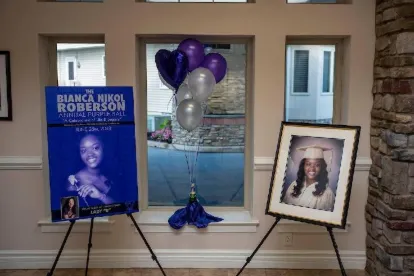
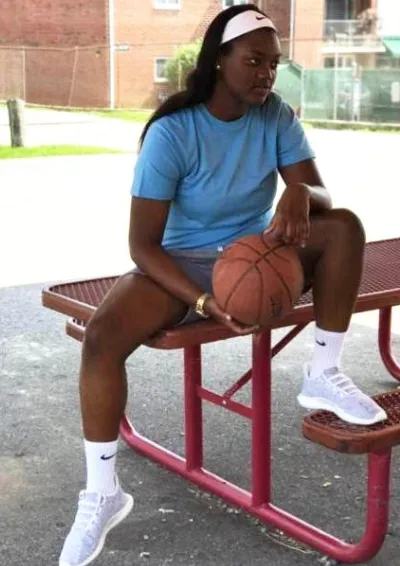
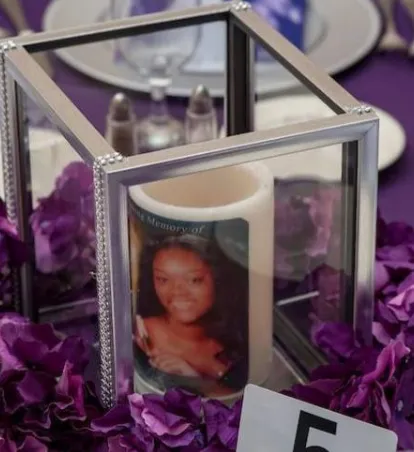
Bianca Nikol Roberson was eighteen and planning a future. Her bedroom floor was scattered with shopping bags and folded clothes for college, each outfit a small promise of the woman she was about to become.
She had just left the mall with her mother and grandmother, arms full of possibility.
She wanted to study forensics. She wanted to help catch the kind of people most others only whispered about.
She talked about law enforcement not as a distant idea, but as a path she was determined to walk.
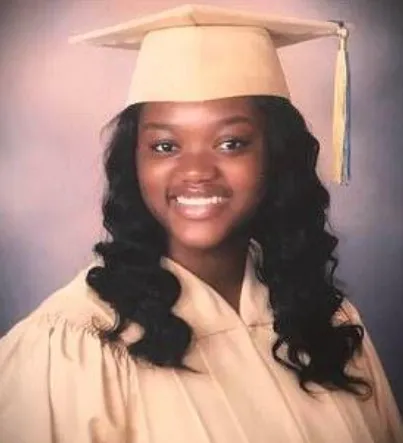
Bianca was two weeks away from high school graduation. Her father had been counting the days, picturing her in a cap and gown, camera ready to capture a smile he was sure would light up the room.
For a family that had already buried one child, every milestone felt both precious and fragile.
Four years earlier, they had lost Bianca’s older brother. Grief had carved a permanent space at the table, a chair that would never be filled again.
Bianca’s laughter had become one of the ways the family survived that loss.
On June 28, 2017, the sky over West Goshen Township looked ordinary. Traffic flowed along Route 100, a river of cars, trucks, and people with somewhere to be.
Bianca merged onto the highway in her green car, the radio playing low, the world still wide open in front of her.
Somewhere behind her, a red pickup truck approached.
Two lanes narrowed, and two drivers tried to occupy the same space. In the space of a few heartbeats, a moment of impatience hardened into rage.
The man in the red pickup didn’t see a young woman with a future.
He didn’t see a daughter who kept her family laughing or a sister whose memory already sat beside another grave. He saw a slight, a challenge, someone who dared to exist in his lane.
According to investigators, there was an altercation as they tried to merge. Maybe it was a gesture, a horn, a look that lasted a second too long. Whatever it was, it ignited something lethal.
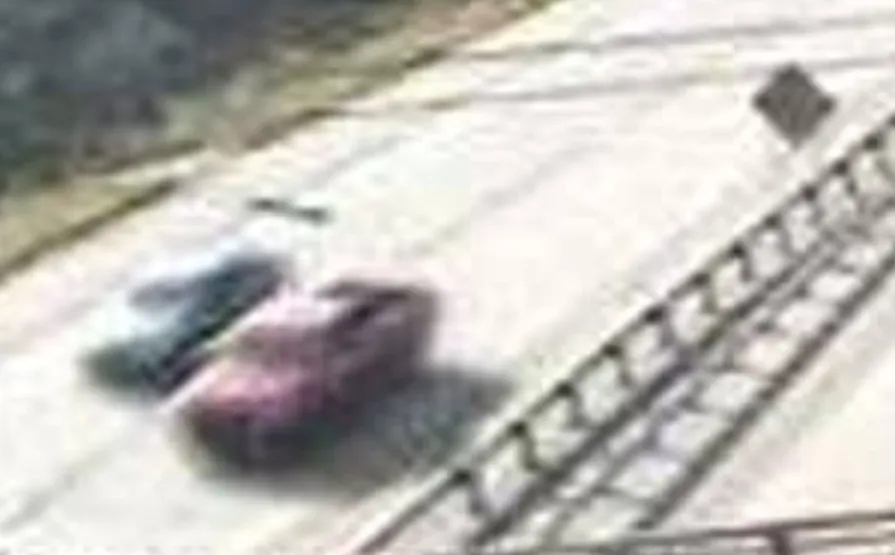
He pulled out a gun. Traffic cameras would later capture images of the two vehicles near each other, one green, one red, the last ordinary frames before everything changed. On that busy road, in broad daylight, he pointed the weapon and fired.
The bullet struck Bianca in the head. In an instant, the girl who had been laughing with her mother in a mall parking lot just minutes earlier was gone. Her car veered off the southbound lanes, leaving the predictable path of traffic and cutting into chaos.
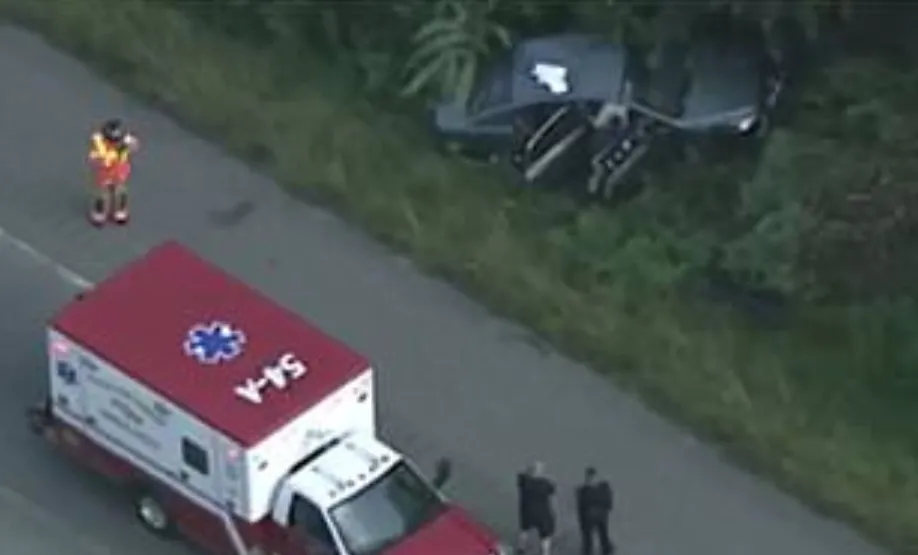
Her vehicle crashed. Metal screamed, glass shattered, tires tore across grass before coming to a violent stop. For other drivers, the crash looked at first like just another wreck on a crowded road.
But when first responders arrived, they found the truth waiting in the driver’s seat. Bianca was slumped over, the wound impossible to mistake. This was not an accident; it was an execution delivered in a fit of highway fury.
The driver of the red pickup sped away. Witnesses scrambled to describe him, their minds struggling to hold every detail in place. A man between thirty and forty, medium build, blond hair, in a red truck—possibly a Chevrolet—fleeing the scene.
The Chester County District Attorney stepped before cameras with a grim, controlled rage of his own. He told the public that this was a case of road rage turned deadly, a senseless killing over space in a lane. “Bianca Roberson was murdered,” he said, making sure no one could soften the truth with gentler words.
Police showed images from traffic cameras. Bianca’s green car and the red pickup were frozen side by side on screens in newsrooms and living rooms. The world saw not just vehicles, but the last seconds before a life was cut short.
A manhunt began. Officers searched highways, rest stops, back roads, any place a red pickup could disappear for a while. The truck was last seen taking an exit off Route 202, vanishing toward Paoli Pike like a swallowed secret.
Bianca’s family watched the news with faces that had already learned how to break. They saw their daughter described in past tense, heard her life reduced to dates and distances and bullet trajectories. Her father listened to officers talk about suspects and leads while trying to remember the last words she had spoken to him.
He wondered if she had been scared in those final seconds. He wondered if she’d had time to think of home, of the college campus she was supposed to walk. He wondered how many times he had told her to drive carefully, never imagining that someone else’s rage could shoot through glass.
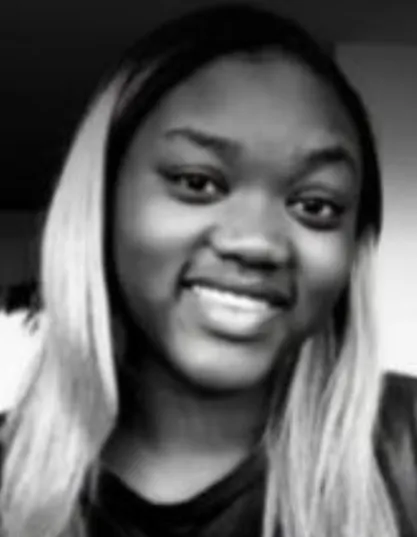
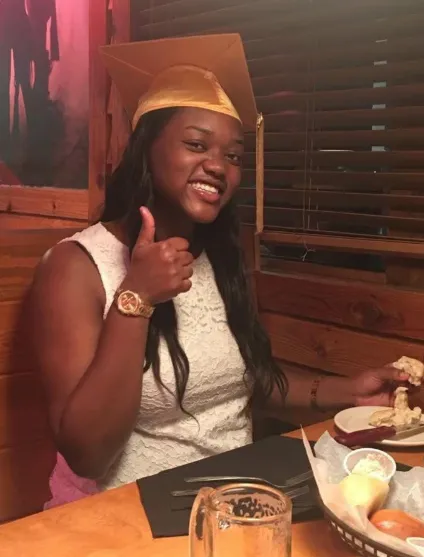
The community mourned. Friends posted photos of Bianca—laughing, posing with friends, hugging family, eyes bright with the kind of joy that doesn’t believe in early endings. Candles were lit, prayers whispered, and social media filled with her name paired with words like “senseless” and “heartbreaking.”
For her parents, the house became unbearably quiet. Her college clothes, bought just hours before, lay folded and untouched, heavy with the future she would never wear. Two bedrooms now belonged to memories instead of children.
Days later, the suspect turned himself in. He walked into a police station that felt very different from the mall parking lot where Bianca had once smiled beside her mother’s car. The man who had turned a lane change into a death sentence now faced his own reckoning.
Charges followed—murder, weapons offenses, the long list of legal terms that try to measure the weight of one life lost. Court dates were scheduled, lawyers prepared, and the system began its slow march toward something it called justice. But no sentence could rewind the moment on the road when he could have chosen patience and didn’t.
Silas read about Bianca’s story months later. He was scrolling on his phone during a quiet evening, the blue light painting his tired face, when her name appeared in a headline. “Road Rage,” it said, “Teen Killed Over Lane Change.”
He clicked without thinking. As he read, the familiar ache rose in his chest, the same one that had grabbed him the day he found the baby. Different roads, different states, but the same thin line between life and death.
He pictured Bianca’s green car beside that red pickup, two drivers who would never meet, never speak, bound together in a moment that neither could undo. He imagined the split second where her hands were steady on the wheel and his fingers tightened around a gun instead. A second where listening—to reason, to restraint, to the simple fact that everyone on that highway was loved by someone—could have saved her.
Silas thought about the newborn girl whose life he had stumbled into. How her survival had depended on a cry quiet enough to miss, and a stranger willing to hear it. How Bianca’s death had depended on someone who heard nothing but his own anger.
On his routes, he started noticing the faces of other drivers more. The exhausted parents, the kids singing along to songs too loud, the people staring ahead with grief or worry etched into their brows. Every car became, to him, a small world, fragile and crowded with stories.
Sometimes he imagined Bianca behind a wheel again, older, wearing a badge, analyzing evidence in a quiet lab. He imagined her working cases like her own, refusing to let any victim become just another file. He imagined her name printed on reports not because she had been lost, but because she had helped bring answers.
The thought hurt, but he held onto it anyway. Keeping her dream alive in his mind felt like a small act of respect, a way of saying that what she wanted still mattered. The world had stolen her future; he refused to let it erase her intention.
One evening, as the sun bled orange across the horizon, Silas pulled his truck to the side of his familiar road. He stepped out, listening to the hush that follows dusk, the air cooling against his skin. For a moment he heard two sounds layered over each other—a newborn’s cry and the echo of a gunshot he’d only ever read about.
He stood there until the sky darkened. He thought about how small choices—slowing down, taking a breath, lowering a gun, pulling over for a sound—could reroute entire futures. He thought about how many stories never make the news because someone chose kindness instead of violence.
As he climbed back into his truck, he made himself a quiet promise. He would keep listening—for cries in ditches, for the shaking in a stranger’s voice, for the sharp edge in his own temper when someone cut him off in traffic. He would remember Bianca every time he felt anger rise like a tide.
Because he understood now that roads are more than lines of asphalt. They are places where lives cross, where mercy and rage fight for the same inch of space. They are where some people disappear, and where others are pulled back from the edge by a single, simple choice.
Silas started the engine and pulled back onto the lane. Headlights stretched out in front of him like a narrow, glowing future. He drove slower than he needed to, window cracked just enough to hear the world.
Somewhere, a little girl he once held for ten trembling minutes was growing up, her story still being written. Somewhere else, a family was setting a place at the table that would never be filled again, their grief an open road they hadn’t chosen. Between those two truths, Silas kept driving, listening, refusing to forget.
Because sometimes, a life is saved simply because someone chose to listen. And sometimes, a life is taken simply because someone refused to. The difference between the two, he knew now, is all the space we have to change.